

Introduction
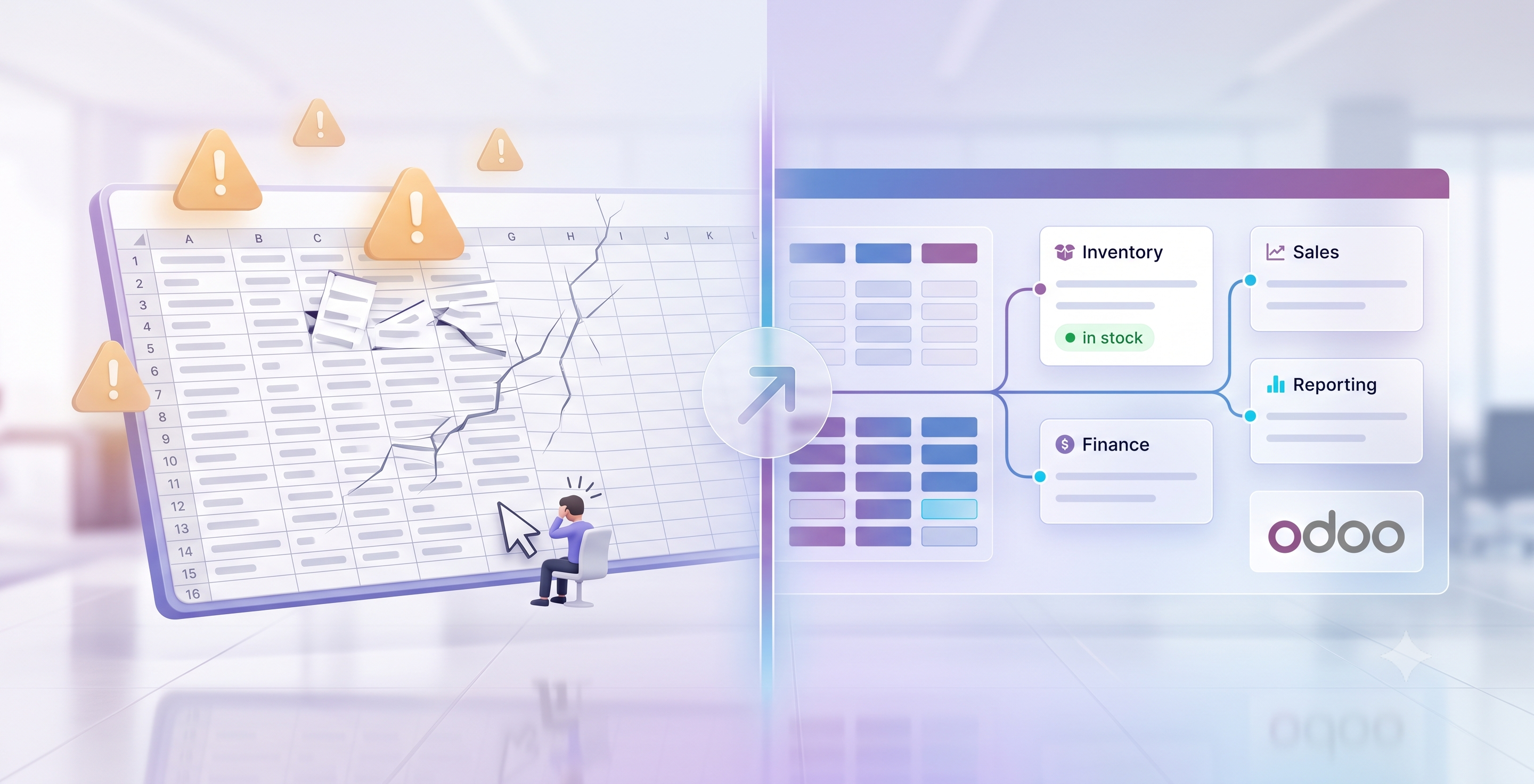
Spreadsheets are where most businesses start. They are free, familiar, and flexible. For a team of five managing a handful of SKUs and a clean customer list, Excel is perfectly fine.
The trouble is that businesses rarely notice the moment spreadsheets stop being a tool and start being a liability. Growth is gradual; the pain builds slowly. By the time leadership acknowledges the problem, months of bad data and manual workarounds have accumulated.
Here are the five patterns we see most consistently in businesses that are ready or overdue for an ERP.
1. You have a "master file" that only one person touches
When a single spreadsheet becomes the source of truth for inventory, sales orders, or accounts and only one person knows how it works you have a single point of failure dressed up as a process.
Holidays, resignations, and sick days become operational crises. And the person maintaining that file is spending hours every week on data entry that a system would do automatically.
2. Month-end is a multi-day reconciliation exercise
If your finance team spends two or more days at month-end matching purchase orders to invoices, chasing delivery confirmations, and resolving discrepancies between the stock sheet and the accounts your data lives in silos.
In a properly configured ERP, a goods receipt automatically updates inventory, triggers a vendor bill, and posts the journal entry. Month-end becomes a review, not a reconstruction.
3. You cannot answer "what is in stock right now?"
If the honest answer to that question is "let me check with the warehouse" or "the sheet was updated on Tuesday", your inventory data is already stale by the time anyone reads it.
Businesses running on live ERP can answer that question with a two-second query. The difference in purchasing decisions, customer commitments, and cash tied up in overstocking is significant.
4. Building a management report takes the whole team a day
Pulling a monthly P&L, a sales performance report, or a customer aging analysis should take minutes. If it takes a day of data gathering, formatting, and cross-checking before a number can be presented in a management meeting, the cost in time alone is substantial before accounting for the decisions made on data that was already outdated.
5. Every new hire breaks something
If onboarding a new sales rep, warehouse operative, or accounts clerk requires three days of training on your spreadsheet structure and they still manage to overwrite a formula in week one the system is too fragile for the size of team you are building.
ERPs give every role a defined interface with validation rules, so data entry errors surface immediately rather than six weeks later in a report.
What to do next
Recognising these patterns is the first step. The second is scoping an ERP implementation correctly which is where most businesses go wrong. Starting with the wrong modules, the wrong partner, or the wrong scope sets a project up for failure.
We help businesses scope their first Odoo implementation in a single two-hour call. No commitment, no pitch just a clear picture of what you need, in what order, and what it will realistically cost.
Ready to move past spreadsheets?
Book a free 30-minute scoping call. We will map what you need and give you a clear implementation plan.
Get free consultation →